-
Introduction
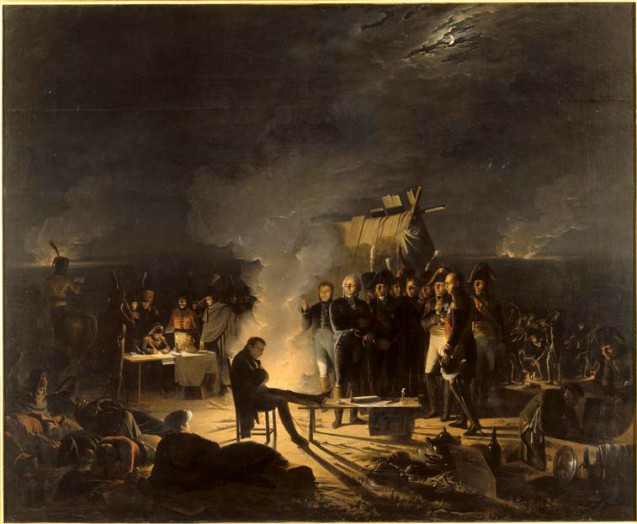
After the setback at Aspern-Essling , Napoleon took six weeks to regroup and to plan how to bring the campaign of 1809 to an end. He had the advantage of possession of the city of Vienna, with its arsenals and stores. This time he took great care crossing the Danube, erecting strong bridges and patrolling them so that they could not be sabotaged. After feinting a repeat of the attack on Aspern, Napoleon dispatched his troops from the eastern edge of the newly christened ‘Napoleon Island’ (ex-Lobau), through slashing rain onto the northern shore of the river. The ensuing battle of Wagram, with its emphasis on heavy firepower and massive bludgeoning troop movements, was to last two and a half days. This time the gunnery of General Boudet, the extraordinary skill of the Marshal Masséna and the tenacity of Marshal Davout on the French right were to win the day. Wagram was the largest ever battle to date in human history, with 300,000 men fighting for two days over a twenty-five mile front. Combined losses (deaths, wounded, prisoners, lost) amounted to more than 80,000 men. This was war on a new level.
-
Commentary
– Ian Castle: The Battle of Wagram
-
Timeline
-
Biographies
French
– BEAUHARNAIS, Eugène de
– BERNADOTTE, Jean-Baptiste-Jules
– BESSIERES, Jean-Baptiste
– BOUDET, Jean
– DAVOUT, Louis Nicolas
– LASALLE, Charles
– MARMONT, Auguste-Frédéric-Louis Viesse de
– MASSENA, André
– MOLITOR, Gabriel-Jean-Joseph
– MOUTON, Georges
– NANSOUTY, Etienne-Marie-Antoine Champion
– OUDINOT, Nicolas-Charles
– WREDE, Carl-Philip, PrinceAustrian
– BELLEGARDE, Heinrich von
– HABSBURG, Archduke Charles
– LIECHTENSTEIN, Jean-Joseph, Prince de
– HOHENZOLLERN-HECHINGEN, Friedrich Franz Xaver von and zu
– KOLLOWRATH, Johann Karl, Count of
-
Bibliography
– Selection of works in English and French
210 years ago… the Battle of Wagram
After the setback at Aspern-Essling, Napoleon took six weeks to regroup and to plan how to bring the campaign of 1809 to an end. The ensuing battle of Wagram, with its emphasis on heavy firepower and massive bludgeoning troop movements, was to last two and a half days and was the largest ever battle to date in human history. Combined losses (deaths, wounded, prisoners, lost) amounted to more than 80,000 men. This was war on a new level.